Embedded Lending Adoption: Notes From an Embedded Finance Review Session
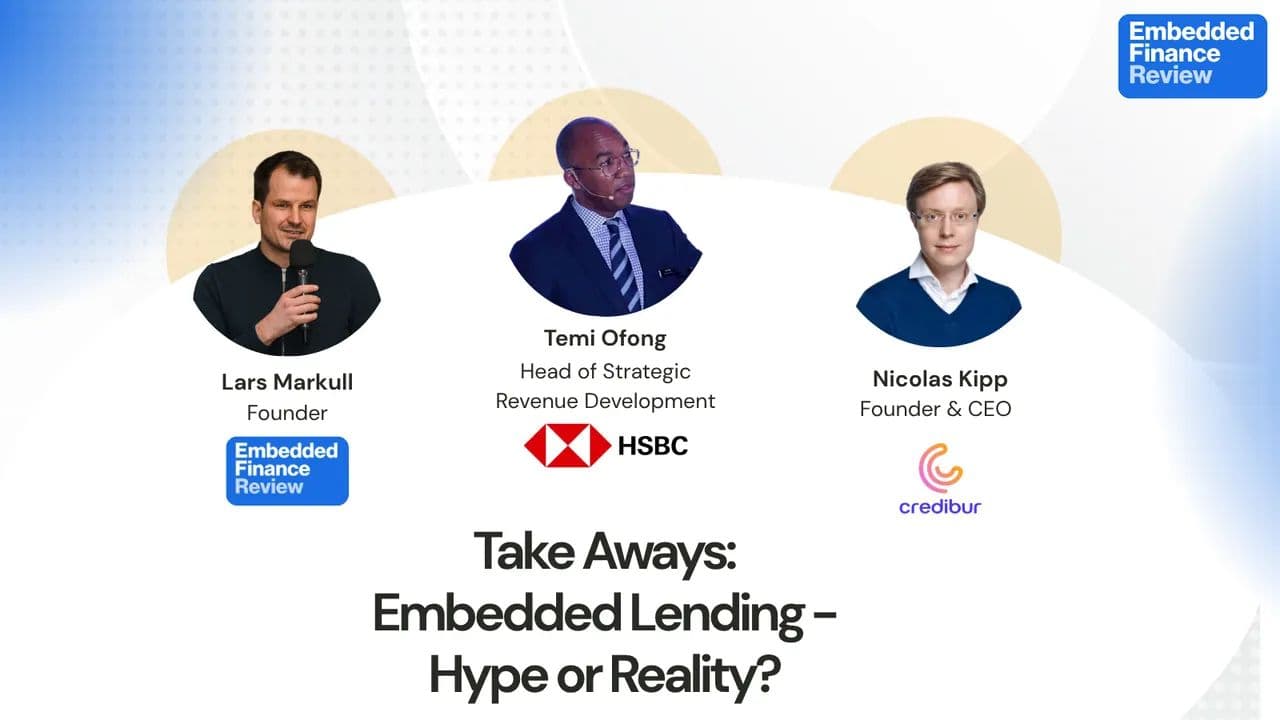
Embedded lending launches are easy to count. Embedded lending adoption is not. That gap was the starting point when Lars Markull of Embedded Finance Review brought around 25 practitioners onto a group call in July, with Temi Ofong from HSBC and Nicolas Kipp from Credibur anchoring the conversation.
Lars has written up the whole session in his summary on Embedded Finance Review. Below are the points that matter most from where we sit, on the funding side of these books.
Embedded lending adoption still trails the announcements
The number the room kept coming back to: lending penetration into e-commerce GMV is still below one percent. Merchants know the option exists inside their platform. Most of them still go to their bank.
The reasons are not mysterious. Journeys are not good enough yet, especially in B2B. Funding costs more than at a bank. And where lending is a nice-to-have for the platform rather than part of the core business, nobody does the unglamorous work needed to get the product right.
The lasting edge is data, not distribution
Embedded lending was sold as a distribution story. The room agreed its durable advantage is data: transaction histories nobody else holds, or control over the underlying asset. Funding starts out more expensive and gets cheaper as that data builds a track record.
That only works if the data actually reaches the people funding the book, in a form they can check. A platform can sit on excellent transaction data and still be priced like an unknown if its capital provider sees a monthly spreadsheet.
Every embedded book gets refinanced somewhere
One point from the session stays with us: in the end, everyone refinances on the same markets. Platforms that move from one lender to several, or that start financing larger tickets against collateral, all run into the same question. Can the capital provider see what is in the book? Natalie Schleiz made the same argument in her piece on why the credit process of the future does not start at the bank.
Nicolas put it plainly in his notes for the Embedded Finance Review newsletter: the experimentation phase is over, and embedded lending turns into a margin business. Margin depends heavily on funding cost, and funding cost depends on how well a capital provider can verify the book.
What to watch
Two regulatory shifts came up at the end: the revised Consumer Credit Directive and the EU's new AML package. Both will change underwriting, and the AML rules will hit models that get by without full KYC today.
Thank you, Lars Markull, for hosting, and Temi Ofong for a sharp conversation. If you are building an embedded lending book and want your capital provider to see it clearly, schedule a demo, or read what independent verification actually looks like.