Cross-Border Securitization Is an Operations Problem
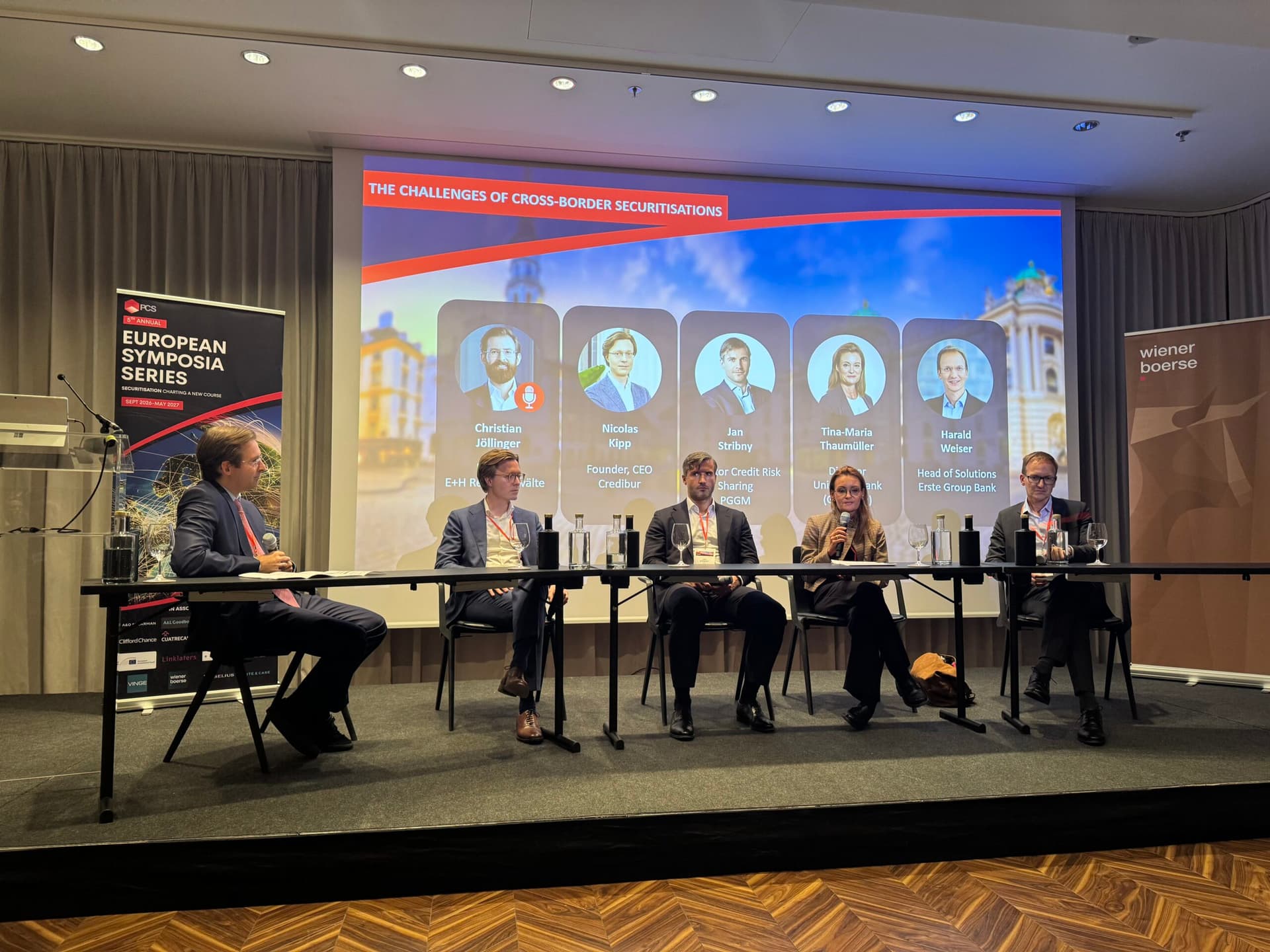
Last week I sat on the panel "The Challenges of Cross-Border Securitisations" at the first PCS Vienna Symposium, held with Wiener Börse. The symposia run under the Chatham House Rule, so this is my own view on cross-border securitization, shaped by the discussion rather than quoting it.
The frame was the EU Securitisation Review. The Commission's own diagnosis is that the 2019 framework overcorrected: the market got safer but did not grow. Fair at the EU level, but what stops a multi-country facility sits mostly outside the Review: true-sale perfection in each country, whether a servicer can be replaced across borders, tax, insolvency ring-fencing. The Commission puts the savings from lighter due diligence and disclosure at around EUR 310 million a year. In the transactions I have seen, the dominant costs were local legal opinions, data standardization and servicer onboarding. The Review touches none of them.
The structure closes once. The portfolio does not.
Legal structuring is solved on the closing date and then sits still. The portfolio moves. Receivables are sold into the vehicle every month, in some facilities daily, and someone has to confirm that what was pledged is eligible, exists and was paid for. In one jurisdiction that is harder than most term sheets admit. Across three or four, it is where cross-border deals actually get hurt.
An originator active in several countries rarely runs one loan book. Each country has its own system, its own identifiers, sometimes its own definition of days past due. The asset tape for the vehicle is assembled from these feeds, and the assembly is where errors and duplicates enter. Collections land in local banks and payment providers per country, often in accounts that also receive money from loans never sold to the special purpose vehicle (SPV). Pulling the vehicle's cash out of a mixed account is a loan-level exercise, not a bank-statement exercise.
Then servicing continuity. A backup servicer can run reporting and reconciliation centrally, but enforcement in each country needs a local partner, named before go-live. Neither the Review nor market practice has standardized servicer substitution.
What technology fixes and what it does not
I was asked how far technology and standardization can get past the operational fragmentation of European securitization. My answer: technology fixes the data layer, the workflow and the reporting. One pool view across countries, eligibility and concentration checks per jurisdiction, cash read directly from every bank account, reconciliation on the same rhythm as the drawdowns. That is what independent verification looks like in a single-country facility too; cross-border just adds jurisdictions. It is a solved problem, provided someone pays for it before closing rather than after the first dispute.
What it does not fix is the law. Perfection formalities stay local, notice in one country, a register in the next. Security interests look different under common law and civil law. A platform centralizes the data; execution stays local. Anyone promising more than that is selling.
Cross-border securitization in CEE
Volumes per country are often too small for a standalone structure. A point-of-sale lender in two or three markets will not get a separate warehouse for each one, so the economics push toward a multi-country pool. Right answer for funding, and exactly the setup that multiplies the data and cash problem.
This is the same logic behind our calculation agent and backup servicing mandates: the value sits in the role being outside the originator, with direct access to the underlying data and the bank accounts. Cross-border does not change the principle. It raises the cost of not having it.
If the operational side of your multi-country facility is still a line item called servicer reporting, look at that line again before closing. Or talk to us before you sign.